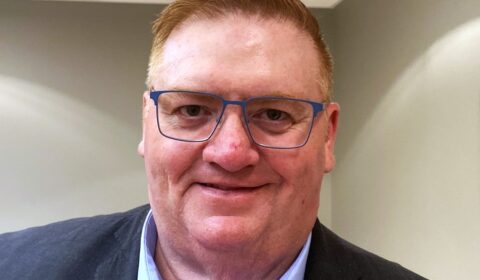
SMITH DEFENDS HIS BILL 100 TO APPOINT ‘STRONG DISTRICT CHAIR’ IN MUSKOKA AS ‘MOST EFFECTIVE WAY’ FOR THE NEXT MUNICIPAL LEADER TO BE ‘ACOUNTABLE TO CONCILLS’ AND ALIGN WITH PROVINCE’S PRIORITIES
Mark Clairmont | MuskokaTODAY.com OPINION
MUSKOKA — Graydon Smith knows about district chairs.
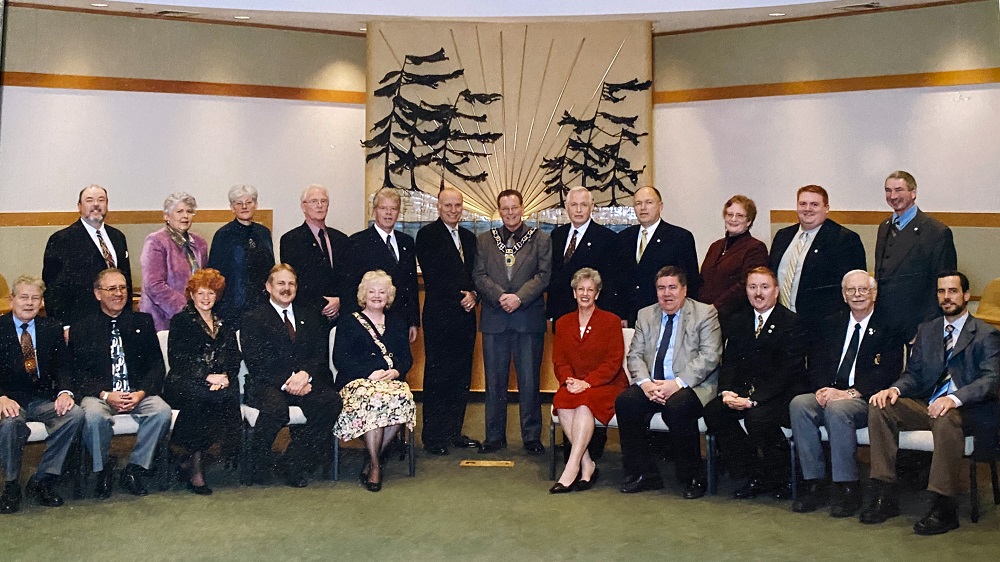
His last term as mayor of Bracebridge, before becoming MPP June 2, 2022, he was four years Muskoka’s deputy chair to John Klinck.
I sat across from him representing Gravenhurst before Smith got elected and we both voted (maybe not the same way) for the district chair’s position along with 20 other councillors from the six lower tier municipalities.
I recall then fellow district councillor and Huntsville mayor — now MP — Scott Aitchison soliciting my support for his potential bid to run against Klinck, which he eventually gave up to run federally and is now a key member of Tory Pierre Polievre’s Opposition team.
As Associate Minister of Municipal Affairs now, in his second term in the legislature, it is Smith ministry that is behind Bill 100 for the province and in charge of appointing seven regional chairs across Ontario next fall.
This as Muskoka is actually a district and not actually a region. But for this bill’s purposes he points out it is a region.
Before my seven years as town and district councillor, as a reporter I covered both levels of municipal council. I was there when Milt Tibbitt became the first district chair in 1970 after amalgamation. And I’ve seen written about all his successors since, including former premier Frank Miller and Gord Adams among some other good ones.
I never liked the in-house voting and wanted a public-wide vote,
which was planned in recent years by the province, but withdrawn.
The current chair, Jeff Lehman, was elected two years ago last month and by many accounts appears to be doing according to residents and their elected representatives. Though he is not been a long-term permanent resident – only seasonally before now. And has caught on quickly.
A smooth talker and with no big complaints openly spoken against him.
A parachute chair would need to live among us and face a steep learning curve to work with councils and get it right for Muskoka.
Now Smith, his Minister Rob Flack and Premier Doug Ford want to appoint Muskoka’s next district chair after municipal elections Oct. 26.
And make him or her a “strong” chair with powers to appoint or fire senior staff, direct staff, veto bylaws and propose the annual budget.
“We made this change, and we think this is the most effective way to have chairs that are both accountable to their councils and work with the province.”
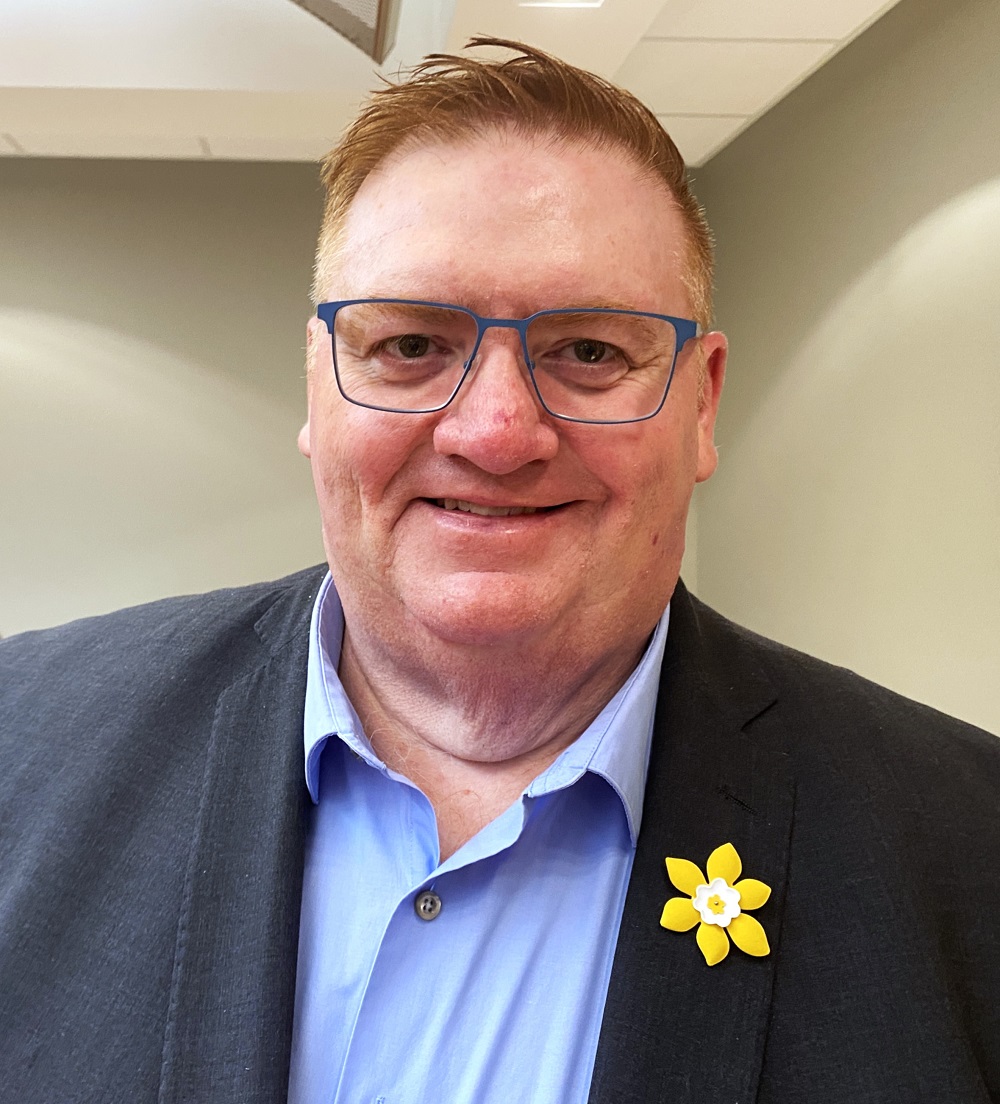
But they are facing flack province-wide, not surprisingly within the seven affected regions, which make up the federations for their local member municipalities. Regional governments in Ontario are upper-tier municipalities that provide shared services (policing, water, waste) to lower-tier municipalities.
Major regional municipalities include Durham, Halton, Niagara, Peel, Waterloo, York, and the District of Muskoka.
Simcoe County and Niagara Region could also have fewer councillors.
Bill 100 does not include any talk council reductions in Muskoka — at either the district, town or township levels — which was once proposed and rejected by the Ford government only a few years ago.
Aligning provincial, regional priorities
Thursday Smith kicked off all-party debate in the legislature on Bill 100.
Then in an interview about it yesterday afternoon, Smith started by telling me: “It’s our ministry that I’m part of bringing that bill forward.
““It’s “been many, many decades since, you know, really changes were made to the model. It’s a mishmash of how chairs end up being appointed. So this is standardizing it so there’s still the accountability framework.”
He said appointing chairs is not unprecedented, citing “notably in Peel, York and Niagara regions.”
The associate minister thinks “from experience” that an appointed chair will streamline decision-making and align some regional and provincial governance.
He told me after making a health funding announcement Friday in Gravenhurst: “Listen, there’s always been provincial priorities. Every major government, since day one, has had priorities that they want to fulfil. Regional governments have always been a big part of that, because they take a lot of the infrastructure dollars and deploy them for roads and bridges and water and sewer.
“So, you know, I think this creates a clearer pathway between what the regions are doing, what they need to do and what to do as part of their own plans. And what the province needs to see happen with our plans, right? By facilitating growth and being able to kind of formalize that relationship a little closer in both directions.”
Including such high Ford and Smith priorities as housing and development.
“It’s “been many, many decades since really changes were made to that model.”
I asked Smith if he or the province have experienced
past times where regions haven’t acted in accordance
with the way Ontario wants. Or aren’t on the same page.
“When we were there together, you know, we looked at the governance review, that we tried to do, and, you know, really kind of failed.
“There’s lots of councillors around the table making decisions — and they’re going to continue to make those decisions.
“And we’ll have chairs in place that have some additional tools to get some of these issues that get stuck on stuff a little bit quicker. But are important to getting things built.”
Smith admitted strong regional chair powers will be similar to municipal strong mayor powers.
“I think frustration gathers around regional tables. And is often expressed by the mayors and the councillors that they should be making processes for important things that drive growth and drive regions forward.”
Getting infrastructure built, that’s what we need to do, he went on.
“There are decisions, again, that some of them need to be made quickly. But some of them move very, very slowly. I think this is an opportunity for the chair not to be there not to tell anybody what to do, but to help facilitate quicker decision-making that suits the priority goals, the local intervention.”
The mayor-turned MPP also cited development charges and “the allocation of OPP costs amongst different regions and municipalities in our area.”
“We spent months being stuck because, while we had excellent chairs in Muskoka, they didn’t have the tools and the flexibility they needed to bring us back to focus on the priority of what we were trying to do with the tools that we were needed to use to create that focus. Again the tools that Bill 100 will allow a chair to use and implement.”
Returning to the topic of future councils restructuring,
I asked Smith if he thought that would come up again.
“It’ll be an interesting conversation, you know, should they enter into that.”
He said as far as he remembers there’s suppose to be a governance review every two terms and that it’s to be within the first two years of the second term to allow the following two years to be implemented or not.
. . .
Thursday Smith kicked off all-party debate in the legislature on his Bill 100.
So, let’s hear in his own words some of what he told fellow MPPs.
“Speaker, again, I’m thrilled to be leading off this debate today on Bill 100, the proposed Better Regional Governance Act, 2026.
“Not surprisingly, and maybe in the most obvious statement of the day, this is a bill about governance, but not governance in theory; governance the way it actually works on the ground: the structures that determine whether decisions get made, whether infrastructure gets built, whether growth is managed effectively and, ultimately, whether the people we serve see results. Because if we are being honest, the current system of regional governance in Ontario is not as clear, not as consistent and not always as effective as it needs to be. And that matters, of course, because we know that good governance drives good outcomes. …
“Regional chairs who are responsible for coordinating across the many municipalities that exist within their regions are often selected through varying processes, accountable in multiple directions and operating within systems where their authority is not always clearly defined.
“That result isn’t causing failure in the system, but it is causing friction. It’s causing delays. It’s causing uncertainty. And as we have discussed many, many, many times in this chamber, there is enough of that being caused by external pressures outside of Ontario and outside of our regions that we need to act quickly, decisively, make decisions smartly and carry on with our business quickly. …
“Speaker, it’s important to recognize there is no consistent model for chair selection across the province, as I mentioned before: some regional chairs already appointed, some regional chairs elected at large, some regional chairs selected by their council. So we have multiple selection systems operating at once. While there are, again, examples of each model working, that inconsistency itself creates confusion and uneven expectations amongst people that are within those regions and in the interface with the province.
“We’ve seen appointed chairs succeed, notably in Peel and York regions. We’ve seen other models function as well. But the absence of consistency is itself part of the problem that this bill seeks to address….”
He added: “That inability to move forward with the clarity and decisiveness that the moment demands can be injurious to us. Bill 100 addresses that directly, and it does so through a set of focused, structural changes that aim to clarify that regional leadership, strengthen the accountability framework and improve decision-making at the regional level. …
“I want to focus today on not just the intent but the mechanics within this legislation, because this bill is about how things work and, of course, we all want them to work well.
At the heart of this bill is a shift towards the appointment of regional chairs in areas where that is not occurring already. The intent here, again, is to move toward a more consistent model across our regions, where leadership is clearly defined, directly accountable and aligned with the responsibilities that regions carry today. …
“But I also want to be clear about how those appointments for chairs would be approached. This isn’t to be a casual process. Appointing a regional chair will involve a careful, deliberate assessment of experience, capacity and leadership ability. …”
Smith also cited discussions about development charges as “becoming bogged down.”
“We knew that the right thing to do would be to reduce development charges in our area to facilitate growth, to have home builders come back to our area and make good things happen in those areas that were already primed and ready for growth. Well, that decision bogged down. It didn’t bog down for a section of one meeting, that one little agenda item that took 10 minutes longer; it bogged down for meetings at a time and weeks at a time ….”
“Speaker, I want to speak from experience again. I know everyone that’s heard me speak before was waiting for me to mention yet again that I was a municipal councillor for a long, long time, 16 years.
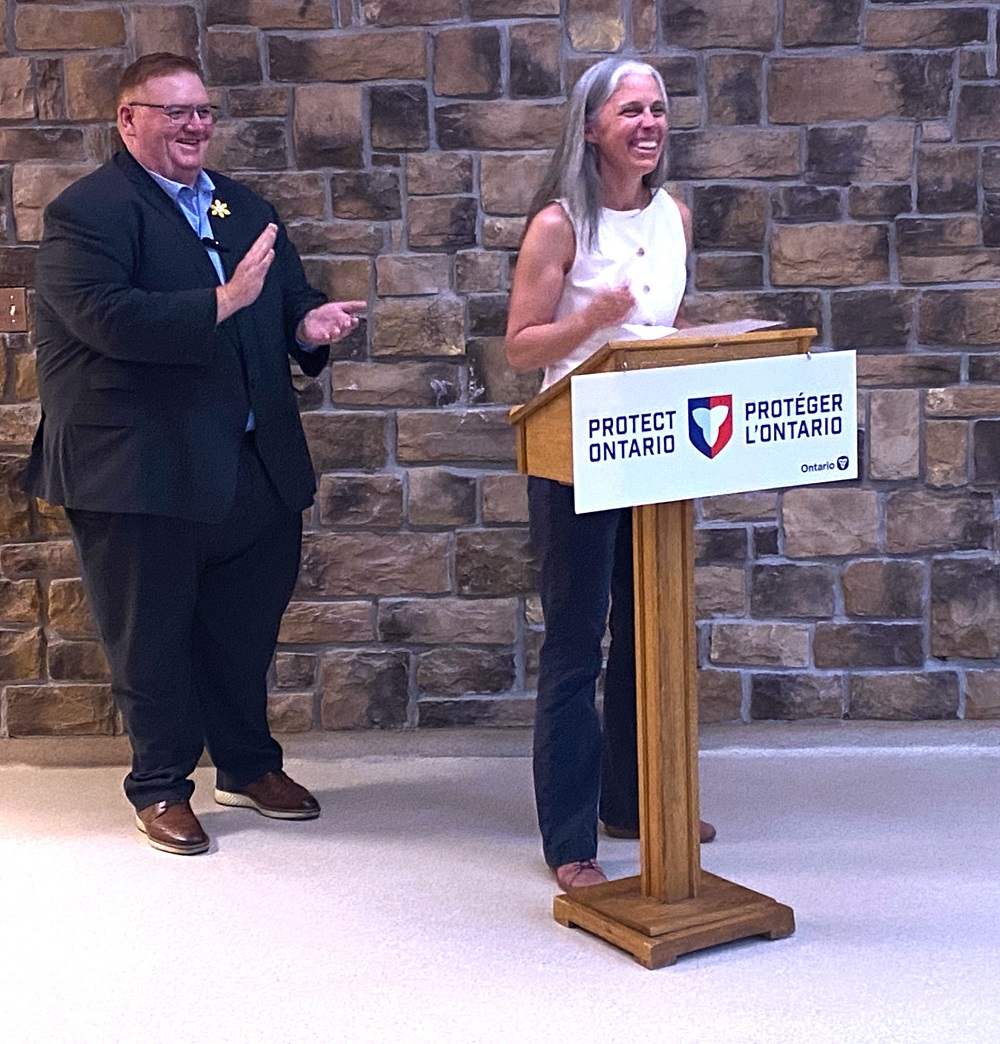
When asked by NDP MPP Wayne Gates if he had been elected,
Smith boasted in reply: “Sixteen years on municipal council,
and I enjoyed every second of it.
Then he went on.
“Speaker, I can tell you this from experience: Those around a council table, those that sit around a regional council table, will never let a chair, regardless of how they have been selected, how they got there and what additional powers they may or may not have—no councillor will let them forget that they need to be accountable to that council as well, accountable to the communities within that region as well.
“In fact, we have heard from mayors around Ontario in different regional councils that the challenge isn’t about accountability. We’ve got a system where people know their roles. But there is a challenge and a frustration around how decisions are made. We hear that time and time again. Decision-making can become fragmented. There are too many competing points of view that pull conversations in different directions, and chairs find themselves in very, very difficult positions, caught in a constant tug-of-war between various factions. And when that happens, what happens? Decisions slow down at precisely the moment they’re needed most. …”
Smith replied when questioned y another MPP about his municipal service.
“Sixteen years on municipal council, and I enjoyed every second of it.
“I served as the deputy chair at the district of Muskoka. I’ve sat around those regional tables. I’ve worked through challenges, decisions, growth pressures, infrastructure decisions, competing local priorities, and I can say it honestly: They’re not easy tables. You’ve got multiple municipalities, differing local pressures, differing political dynamics, but real consequences tied to every decision. Most of the time, that system works. People collaborate. They find decisions. They move forward. ..’”
“Speaker, there’s a broader principle at play here, and it’s about responsibility and authority being aligned. We know that the province has stated its priorities over and over again.
“We want to see communities succeed. We want to see them be prosperous. We need to see them grow. We need to see housing grow. We need to see infrastructure there to accommodate that. We want to see economic growth.
“Those are not optional positions for any government to take. They are core responsibilities, yet the governance structures responsible for delivering those outcomes at the regional level have not always been aligned with that reality.”
📧 Contact, Subscribe, Advertise
Email: news@muskokatoday.com
Subscribe: E-transfer $30 to news@muskokatoday.com
Mail: MuskokaTODAY.com, Box 34, Gravenhurst, ON P1P 1T5
Advertise: Email news@muskokatoday.com for rates
April 24, 2026 @ 8:41 am
Once you let Conservatives take away your vote, you may never get a vote again. We need someone from Muskoka, not some unemployed Toronto yuppie!